Blog
Embroidery vs Screen Printing: Which Fits Best?

A left-chest logo on a work polo and a bold fundraiser graphic across the front of a T-shirt may both represent your organization, but they need very different decoration methods. When choosing embroidery vs screen printing, the best answer comes down to the garment, artwork, quantity, budget, and the impression you want people to take away from the finished piece.
For many businesses, schools, teams, and families, the choice is less about production terminology and more about a practical question: What will look right for this project? A polished uniform program, a spirited event shirt, and a personalized jacket each call for their own approach. Knowing the difference early helps you choose apparel and artwork with confidence.
Embroidery vs Screen Printing at a Glance
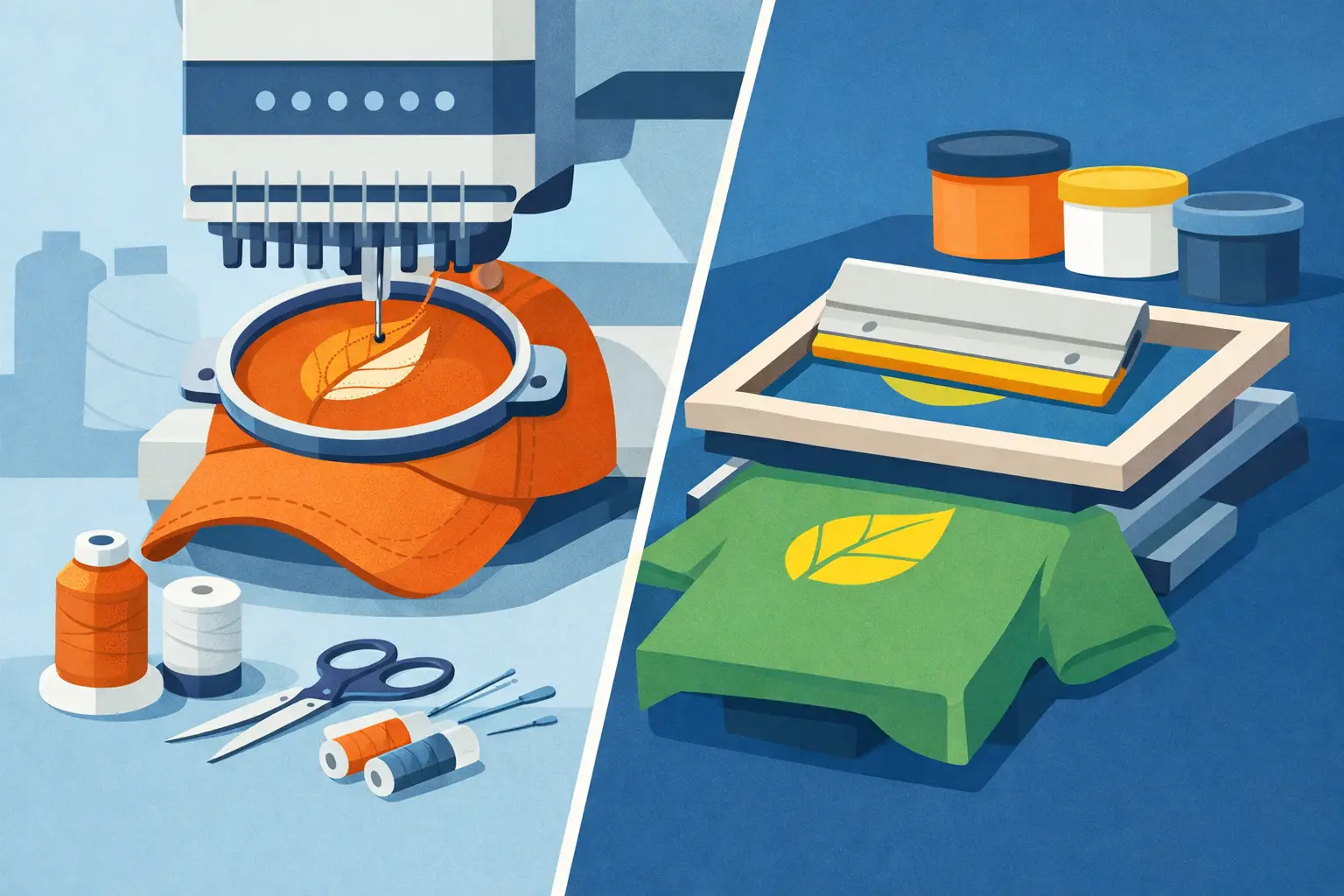
Embroidery uses stitched thread to build a design directly onto the garment or item. It creates a textured, dimensional finish that is commonly chosen for logos on polos, button-downs, jackets, hats, bags, and uniforms. Because the design is made with thread rather than printed ink, embroidery has a classic, professional appearance that works especially well for smaller logos and simple, recognizable artwork.
Screen printing applies ink to fabric through prepared screens, with each color generally requiring its own setup. It is a natural fit for larger graphics, bold lettering, school spirit shirts, team apparel, event merchandise, and bulk orders. A screen-printed design lies flatter against the garment and can show off a larger image without adding the texture of stitching.
Neither method is automatically better. The right choice depends on what your apparel needs to do, who will wear it, and how your design is meant to be seen.
When Embroidery Makes the Most Sense
Embroidery is often the first choice when your goal is a refined, consistent logo presentation. Think employee polos for a front desk team, branded jackets for a field crew, logo hats for a local business, or quarter-zips for an organization that wants a coordinated look. The raised thread adds visual interest without needing a large graphic.
Small left-chest designs are particularly well suited to embroidery. A business name, clean logo mark, monogram, or short line of text can look at home in that space. Embroidery also works nicely for personal pieces, such as a name on a backpack, a meaningful detail on a gift, or a family name on a keepsake item designed for fabric.
Artwork matters here. Fine lines, tiny lettering, color gradients, and highly detailed images may need to be simplified before they can be stitched clearly. That is not a drawback so much as a design consideration. A strong embroidered logo is usually clean, readable, and built around the details that matter most.
Garment choice also plays a role. Thread has some weight and dimension, so sturdier apparel and structured items often provide a great foundation. A polo, jacket, cap, work shirt, fleece, or bag can support an embroidered design well. For very lightweight or thin garments, it is worth discussing the intended placement and logo size before moving forward.
When Screen Printing Is the Better Fit
Screen printing shines when the design is meant to be seen from across a room, across a gym, or across a crowded event. It gives you room for larger graphics, team names, class-year designs, campaign messages, and event artwork that covers more of the front or back of a shirt.
If you are organizing shirts for a school event, company outing, volunteer day, family reunion, or sports season, screen printing is often an efficient and visually effective choice. A bold one-color design can make a big statement, while multi-color artwork can bring energy and personality to the garment when the design and order details support it.
This method is especially useful when your artwork includes broad areas of color or a graphic that would be too large, dense, or detailed for stitching. For example, an illustrated event design with a large headline, a mascot-style graphic, and sponsor names is generally more at home on a printed T-shirt than on an embroidered one.
Screen printing is commonly considered for larger quantities because the process is designed around preparing artwork and screens for the order. The exact fit for your order still depends on the number of colors, garment type, design placements, and the quantity you need. Sharing those details up front makes it easier to receive guidance that fits your project rather than a one-size-fits-all recommendation.
Think About the Artwork Before the Apparel
Customers often start by selecting a favorite shirt or jacket, then wonder which decoration will work. Starting with the artwork can make the decision easier.
A logo with simple shapes, solid colors, and clear text may work beautifully with either embroidery or screen printing. The deciding factor may then be placement and purpose. A small left-chest logo on a polo can look professional in embroidery, while that same logo enlarged across the back of a T-shirt may be better suited to screen printing.
Detailed illustrations and designs with a lot of small visual elements need a closer look. Screen printing can be a strong option for art intended to stay flat and expansive on the garment. Embroidery may call for a simplified version that preserves your logo’s identity while making sure the stitched result remains clean and readable.
If you only have a rough idea, that is still a useful starting point. A logo file, a photo of a previous shirt, a hand-drawn concept, or even a description of the occasion can help guide the conversation. You do not need to know the production language to ask for the right result.
Placement Changes the Decision
The location of the design can be just as important as the design itself. Embroidery is a natural match for left-chest logos, sleeves, hat fronts, collars, and smaller areas where a polished detail is the goal. It can make a uniform feel intentional without overwhelming the garment.
Screen printing gives more flexibility for large front prints, full-back graphics, and designs that stretch across a shirt. It is also useful when you want prominent names, numbers, messaging, or artwork that needs more room to breathe.
Some projects may benefit from combining decoration styles across a coordinated apparel order. For instance, a staff polo program may use embroidered logos while a related company event T-shirt uses a screen-printed graphic. The pieces still feel connected when the colors, logo treatment, and overall purpose are planned together.
Consider Quantity, Budget, and How the Apparel Will Be Used
Order size can influence the practical choice between embroidery and screen printing, but it should not be the only factor. A small number of personalized polos may call for embroidery because the finish aligns with the purpose. A larger run of shirts for an annual event may lean toward screen printing because the design is larger and the group needs matching apparel.
Budget is also tied to the design itself. With embroidery, stitch complexity, size, and placement can affect the work involved. With screen printing, colors, print locations, and order quantity can shape the setup and production approach. The clearest path is to share your artwork, apparel preferences, estimated quantity, and deadline so the recommendation reflects the full project.
It also helps to think about wear. Is this apparel for customer-facing employees, a one-day celebration, a youth team, a volunteer group, or a gift? A uniform logo may need a more understated finish. A reunion shirt may need big, cheerful artwork that brings everyone together in a photo. The intended moment often points to the right method.
A Simple Way to Choose
Choose embroidery when you want a textured, professional-looking logo on items such as polos, hats, jackets, bags, or uniforms. It is especially effective for smaller designs and recognizable branding.
Choose screen printing when you want larger artwork, bold messaging, broad areas of color, or matching shirts for an event, team, school, or organization. It is well suited to graphics that need room on the garment.
If your project sits somewhere in the middle, do not force the decision based on a single rule. A good production partner can review the artwork and explain what will translate best to your chosen apparel. At Busy Bee Stitches, that guidance starts with what you are trying to create, whether that is a polished staff look, a memorable event shirt, or a personal piece made for someone special.
Bring the logo, the idea, or even just the occasion. Once the purpose is clear, choosing the finish becomes much easier, and the finished apparel can feel like it was made for your group from the start.
Latest Post