Blog
How to Choose Uniform Embroidery for Your Team

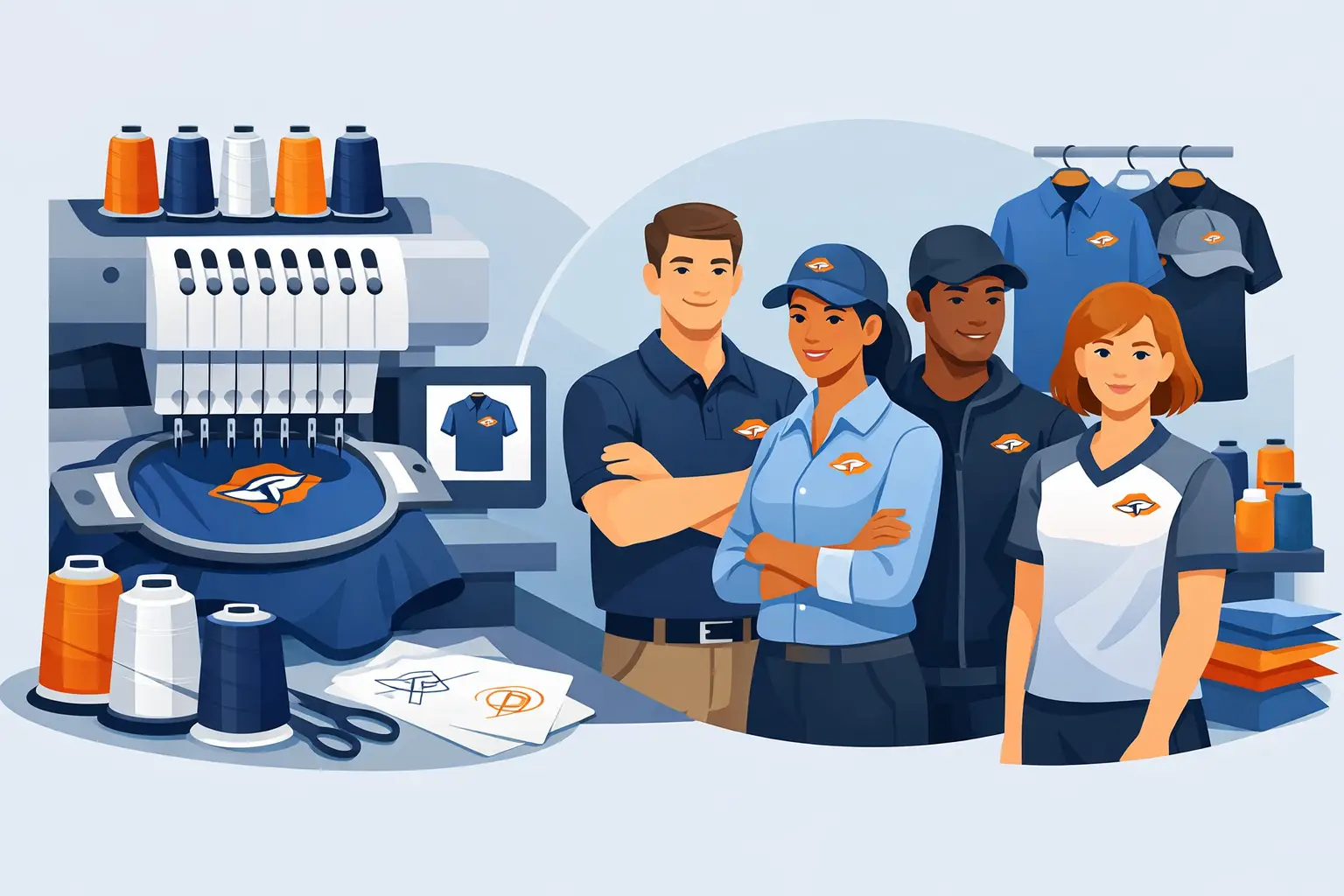
A uniform can make a small crew look coordinated before anyone says a word. But knowing how to choose uniform embroidery means looking beyond the logo itself. The garment, placement, thread colors, and day-to-day use all shape how your finished apparel feels for the people wearing it and the customers meeting them.
For a front-office team, restaurant staff, school group, construction crew, or volunteer committee, the best choice is usually the one that fits the work as well as the brand. A clear plan at the beginning helps avoid artwork that is too detailed for the space, garments that do not suit the job, or a design placement that feels awkward once the uniform is on.
Start with the job your uniforms need to do
Before choosing a polo, jacket, button-up, hat, or work shirt, think about where and how it will be worn. A logo shirt for a customer-facing team may call for a clean, polished look with a smaller left-chest design. A grounds crew, team coach, or event staff member may need a garment choice that fits a more active day.
Consider the setting, season, and expectations for your organization. Will employees wear these uniforms indoors, outdoors, or both? Do they need layers for changing weather? Are the uniforms part of a dress code, or are they meant to create a consistent look at a one-time event? These answers make the product selection much easier.
It also helps to decide whether every person needs the same garment. A coordinated uniform program does not always mean identical items. Your office staff may prefer polos while field employees choose jackets or workwear. Using the same logo, thread colors, and placement across different garments can keep the group looking connected while giving people practical options.
Choose a garment that works with embroidery
Embroidery adds dimension and texture, which is one reason it is a popular choice for uniforms. Still, different fabrics and garment areas respond differently to stitched designs. A stable, smooth area is generally easier to decorate than a very thin, highly stretchy, heavily textured, or loosely knit surface.
Polos, button-up shirts, jackets, fleece, caps, and many workwear styles are common uniform embroidery choices. The best option depends on your logo and the use of the garment. For example, a detailed logo may need a smoother embroidery area than a thick textured item. A small design can work well on a hat, while a wider logo may be better suited to a shirt chest or jacket back.
You do not need to know every fabric term before requesting a quote. Sharing the type of work your team does, the style you have in mind, and your logo gives your embroidery partner a useful starting point. Production guidance is especially valuable when you are trying to match multiple garment styles for one organization.
Think about comfort and employee buy-in
Uniforms work better when people are comfortable wearing them. That sounds simple, but it can make a real difference in whether apparel gets used regularly. Consider fit ranges, sleeve preferences, layer options, and whether employees may be working in warm spaces, cold conditions, or active environments.
If you are outfitting a larger team, it is often smart to gather sizes and preferences before finalizing the order. A little organization early on can reduce the need for follow-up orders and help everyone receive apparel that feels appropriate for their role.
Keep your logo clear at embroidery size
A logo that looks great on a website or business card may need adjustment before it becomes embroidery. Fine lines, tiny lettering, gradients, and very small details can be difficult to reproduce clearly in thread, especially on a compact left-chest or hat design.
This does not mean your logo has to lose its identity. It means the design may need a simplified embroidery version that preserves the elements people recognize most: your business name, icon, shape, or primary colors. A clean design is often easier to read from a normal distance and gives the uniform a more professional appearance.
When providing artwork, send the best file you have available. Vector artwork is helpful when you have it, but a clear image file can still provide a starting point. Include any notes about brand colors, preferred logo versions, or details that must remain part of the design. If your organization has several logos, identify which one should be used on each garment.
Color choices should support visibility
Thread colors should work with the garment color, not disappear into it. A dark logo on a dark navy polo may be on-brand, but it may not stand out as clearly as expected. Similarly, very light thread on a light garment can make a logo harder to notice at a glance.
Contrast matters, but so does consistency. If your team wears several garment colors, decide whether the same thread colors will work across all of them or whether an alternate logo treatment is needed. This is a practical detail that can make a mixed uniform program look intentional rather than pieced together.
Select placement based on how the uniform is used
Left-chest embroidery is a familiar choice for business uniforms because it is visible without taking over the garment. It works well for company names, compact logos, and employee identification. For some teams, a larger back design, sleeve decoration, or hat embroidery can add visibility where it makes sense.
Placement should match the purpose. A small left-chest logo may be enough for office apparel or a restaurant team. A landscape company, school booster group, or event crew may want a more visible design on outerwear. Names or job titles can also be useful, but they are not always necessary. Adding individualized details creates a more personal uniform, while keeping every piece the same can make future reorders simpler.
Ask yourself what someone should see first from a few feet away. Is it the organization name? A recognizable logo? The employee’s name? There is no single right answer, but deciding that priority helps guide both placement and design size.
Plan for quantity, reorders, and a consistent look
A uniform order is often the start of an ongoing need, not a one-time purchase. New hires, seasonal staff, team growth, and replacement items are all common reasons to reorder. Choosing a design and garment approach you can return to later makes that process easier.
For a larger organization, keep a simple record of the approved logo version, garment colors, thread colors, locations, and placement details. If different departments wear different apparel, note which combination belongs to each group. This does not need to be complicated. A straightforward reference helps maintain consistency as your team changes.
Quantity also affects how you plan the project. A small order for a family business may allow more personalization, such as individual names. A larger school, event, or company order may benefit from a standardized design that keeps every piece coordinated. Both approaches can look great when they are chosen for the right reason.
Use a sample-minded approach before finalizing details
Uniform embroidery is more than placing a logo on a shirt. Size, location, thread color, and garment color all work together. Before approving an order, review the details with the finished uniform in mind rather than the artwork alone.
Be ready to share your logo, desired garment types, approximate quantity, sizes if available, and any deadline connected to an event or staff launch. If you are unsure about design size or placement, say so. A good production conversation should make the choices feel clearer, not more technical.
At Busy Bee Stitches, customers can bring an existing logo, an idea, or a list of apparel needs and get help shaping it into a coordinated order. Whether you are serving a local team in Frankfort or organizing uniforms for a group elsewhere in the country, the goal is the same: apparel that represents your people well.
The best uniform embroidery choice is rarely the most complicated one. It is the one your team will feel good wearing, your customers will recognize, and your organization can confidently order again when the next person joins the crew.
Latest Post