Blog
Embroidery Versus Heat Transfer: Which Fits?

A work polo and a reunion T-shirt may both carry a logo, but they do not need the same decoration method. Embroidery versus heat transfer is less about choosing the “best” option overall and more about choosing the finish that fits your artwork, garment, quantity, and purpose.
For a business uniform, a school spirit order, a team warm-up, or a one-of-a-kind gift, the right choice can make the finished piece feel intentional. You do not need to know production terminology before getting started. A clear idea of where and how the item will be used gives you a strong place to begin.
Embroidery Versus Heat Transfer: The Visual Difference
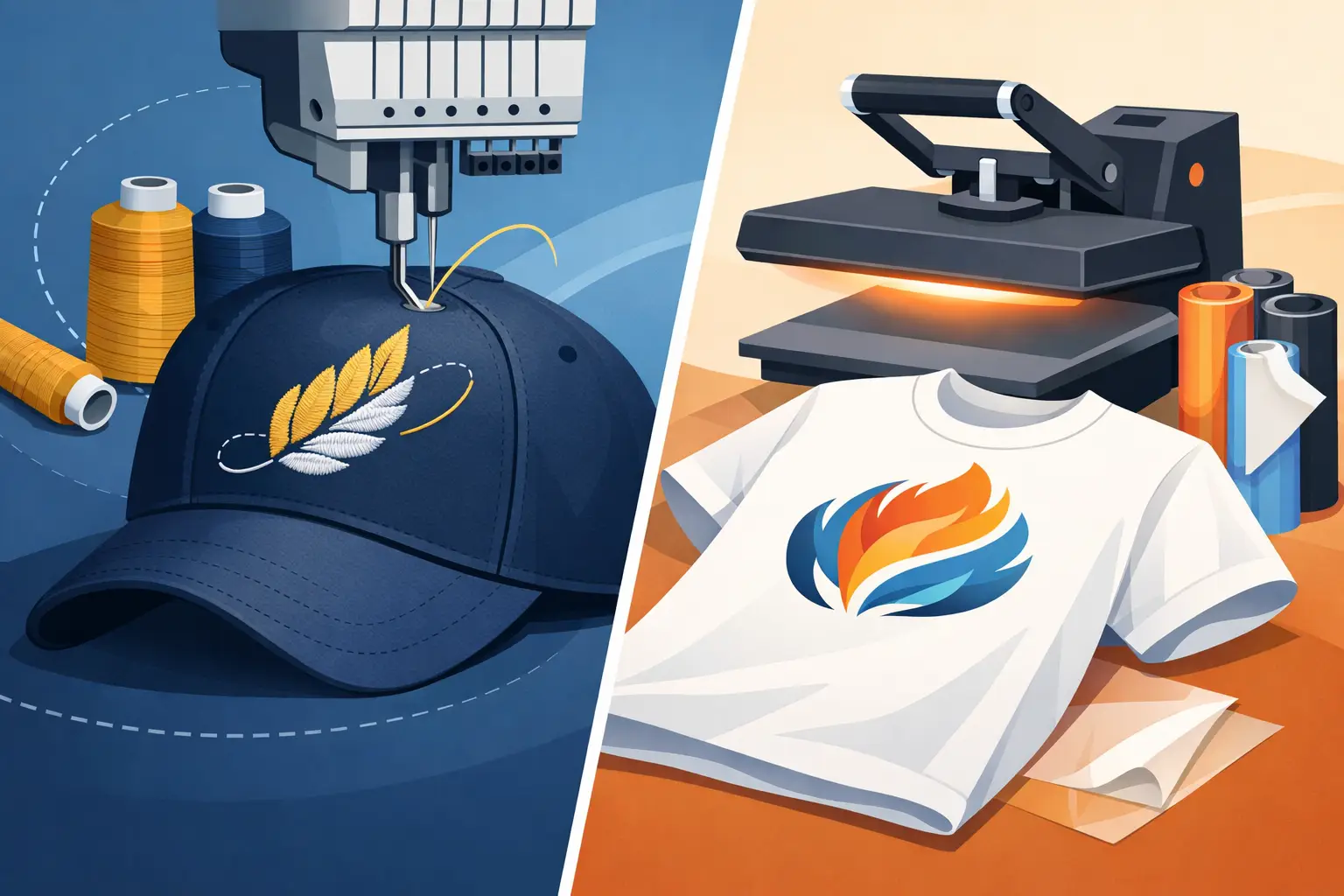
Embroidery creates a design with thread stitched directly onto the garment or item. It has dimension, texture, and a classic branded appearance that many people associate with uniforms, professional apparel, and polished logo wear. On a polo, quarter-zip, jacket, hat, or button-down, embroidered decoration can give a simple logo a finished, established look.
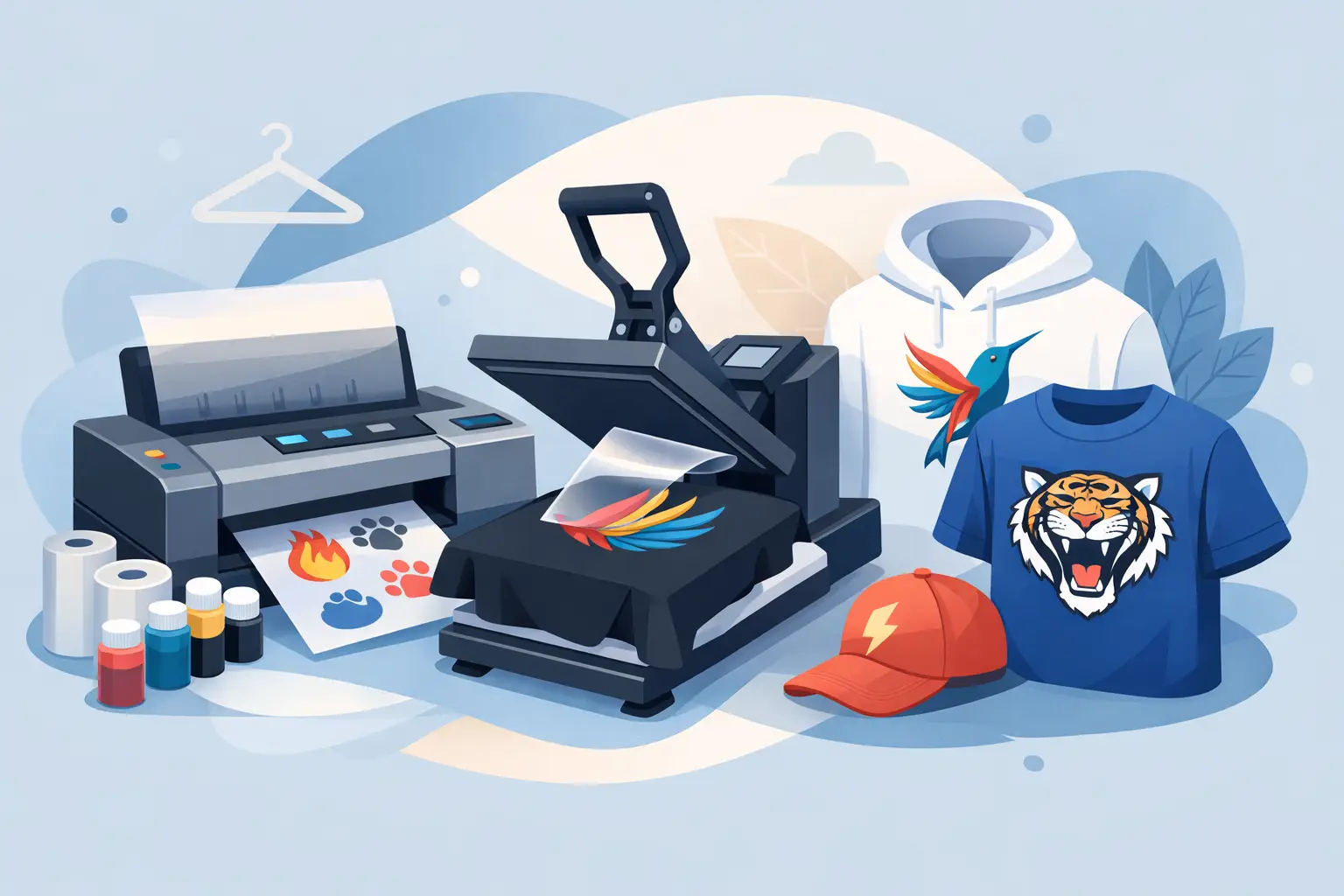
Heat transfer applies a printed design to the surface of an item using heat and pressure. The result is typically smoother and flatter than embroidery. It is a practical fit for artwork with full color, fine details, gradients, small text, or photographic elements that would be difficult to recreate in thread.
Neither finish is automatically more professional. A clean embroidered chest logo can be exactly right for a front-office team, while a detailed heat transfer may be the better visual match for a colorful event shirt or a design built around illustration. The artwork should lead the decision.
When embroidery makes sense
Embroidery is often a natural choice when you want the decoration itself to have visible texture. It works especially well for simplified logos, names, monograms, and designs with solid color areas. It is commonly selected for staff polos, company jackets, hats, bags, outerwear, and organizational apparel where a traditional logo treatment is the goal.
Scale matters. A logo that looks great on the left chest may not translate well if it includes extremely thin lines, tiny lettering, or many small visual details. Thread has physical width, so a design may need to be simplified or adjusted to stay readable at a smaller size. This is not a loss of quality. It is part of preparing artwork for the medium.
Embroidery also changes the hand and appearance of the garment in the decorated area. On structured pieces such as polos, jackets, and caps, that added dimension often feels right at home. On very lightweight or highly stretchable apparel, the garment and placement deserve a closer look before deciding.
When heat transfer makes sense
Heat transfer is a strong option when the design needs to look much like the original digital artwork. It can accommodate colorful graphics, detailed logos, layered artwork, and personalized information without converting every detail into stitches. A name-and-number setup for a team, a commemorative family design, or a multi-color event graphic can all be good candidates.
It can also be useful when a design is larger or more expressive than a typical embroidered chest logo. Think of a full-front graphic, a statement design on the back of a shirt, or artwork that includes detailed linework. Heat transfer gives those designs room to be seen as they were intended.
That does not mean heat transfer is only for casual apparel. A crisp, well-placed transfer can look sharp on branded pieces, especially when the logo contains details that would be difficult to reproduce cleanly with thread. The key is matching the decoration to the garment and the role the piece needs to play.
Choose Based on the Project, Not Just the Product
The same organization may have a good reason to use both methods. A landscaping company, for example, might choose embroidered logos for staff polos and jackets while using heat transfer for a colorful seasonal shirt. A school may use embroidery for faculty quarter-zips and transfers for a spirit-wear design featuring a detailed illustration.
Start with the audience. Is this item meant to feel like an everyday uniform, a commemorative keepsake, a fundraiser shirt, or a promotional giveaway? A piece people will wear to represent their role at work may call for a more classic logo treatment. A shirt built around a special event or a bold graphic may benefit from the color and detail of heat transfer.
Then consider placement. Small left-chest logos, hat fronts, sleeves, and monograms often point toward embroidery when the artwork is simple enough. Larger front or back designs tend to give heat transfer more visual breathing room. This is a guideline, not a hard rule. A simple oversized embroidered design and a small detailed transfer can both work when planned thoughtfully.
Garment selection is part of the conversation, too. Fabric weight, stretch, texture, and color can influence the final appearance. Providing the garment style or a photo of the item, along with your logo or design idea, helps a production partner recommend a finish that makes sense.
Artwork Can Decide the Answer
A logo file may look perfect on a computer screen but need a few changes before it is ready for embroidery. Fine type, thin outlines, and small spaces can become difficult to read once thread is involved. In some cases, a simplified version of the logo is the best embroidery solution. Many organizations keep one version of their mark for embroidered apparel and another for printed applications.
For heat transfer, high-quality artwork still matters. Clear files create cleaner-looking printed details, especially when the design includes text, small elements, or multiple colors. If you are not sure what file you have, send what is available. A logo, photo, screenshot, or design reference is often enough to start a useful conversation about what the finished item can look like.
This is also where personalization changes the choice. Names, graduation years, player numbers, family roles, and event details can work especially well with heat transfer when each item needs different information. Embroidery can be a wonderful option for individual names or monograms, too, particularly on gifts, bags, robes, or polished apparel. The best route depends on the size of the personalization and the overall design.
Think About Order Size and Order Mix
Large orders and small orders can both benefit from either method, but the project details matter. If every shirt carries the same simple chest logo, embroidery may suit the look you have in mind. If each piece needs a different name, number, or custom message, a transfer approach may offer more flexibility for the artwork.
It also helps to consider whether your order includes different garment types. A coordinated order might include polos for office staff, hats for the field crew, T-shirts for an open house, and a few personalized gifts for employee recognition. Using one decoration method across every item is not always necessary. A coordinated brand can still use different finishes where each one makes the most sense.
Rather than forcing a logo onto every item in exactly the same way, focus on consistency in color, placement, and overall presentation. That approach often creates a more considered final collection.
Questions to Ask Before You Choose
Before placing a custom apparel order, gather a few basics: the logo or artwork, the garment type, approximate quantity, desired placement, and the date you need the items for. If your design includes small lettering, many colors, or personalized details, mention that early. Those details can quickly point the project toward embroidery, heat transfer, or a combination of both.
You should also think about what you want people to notice first. Do you want a subtle, textured logo that supports a professional uniform? Or do you want a detailed graphic that becomes the main feature of the shirt? Both are valuable outcomes, but they create different impressions.
At Busy Bee Stitches, the goal is not to make you become an expert in decoration methods. It is to help bring your logo, event, team, or gift idea to life in a way that feels right for the finished product. Share what you are planning, where the design will go, and what matters most to you. From there, a thoughtful recommendation can turn a rough idea into apparel people are happy to wear.
Latest Post